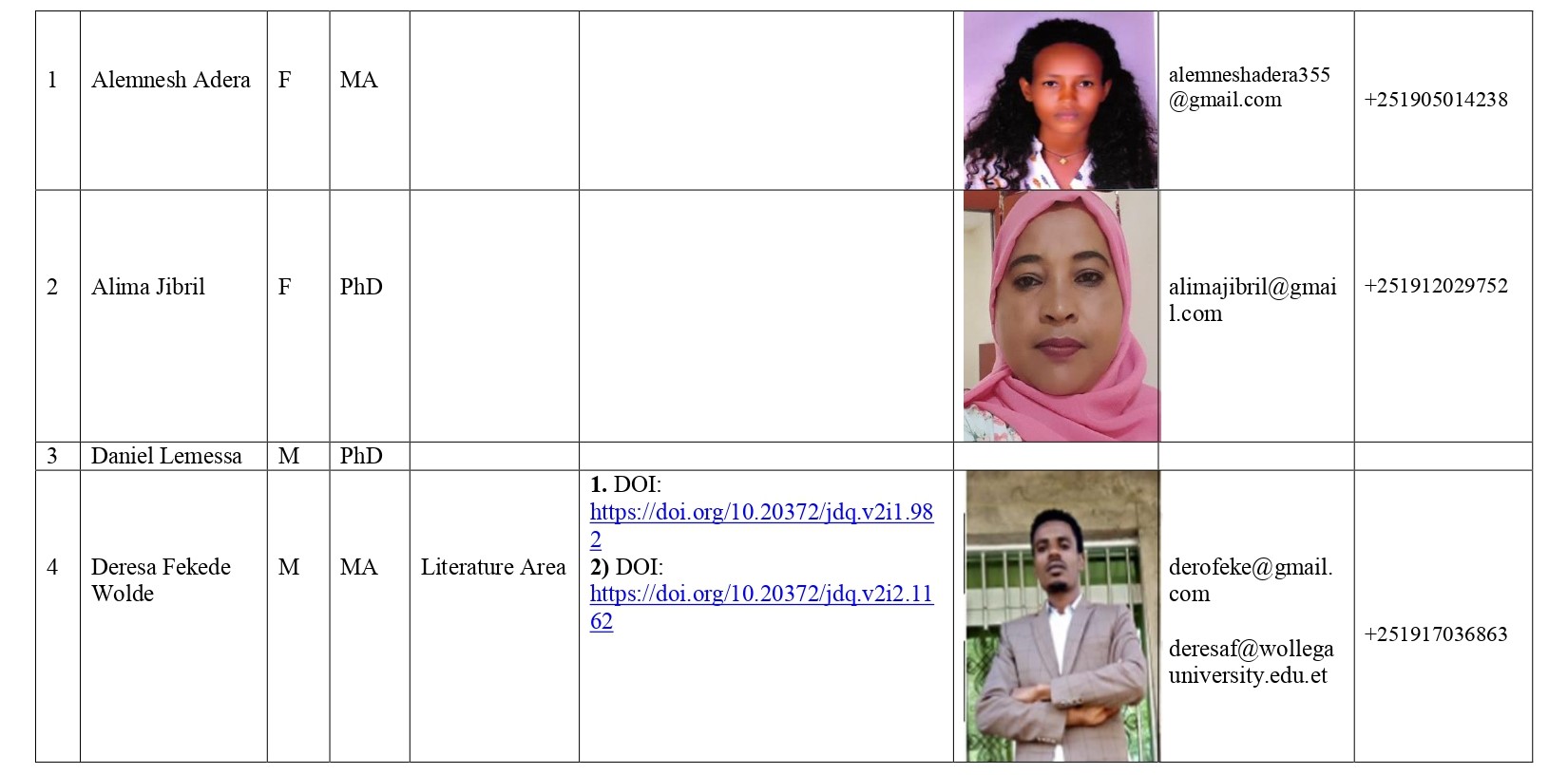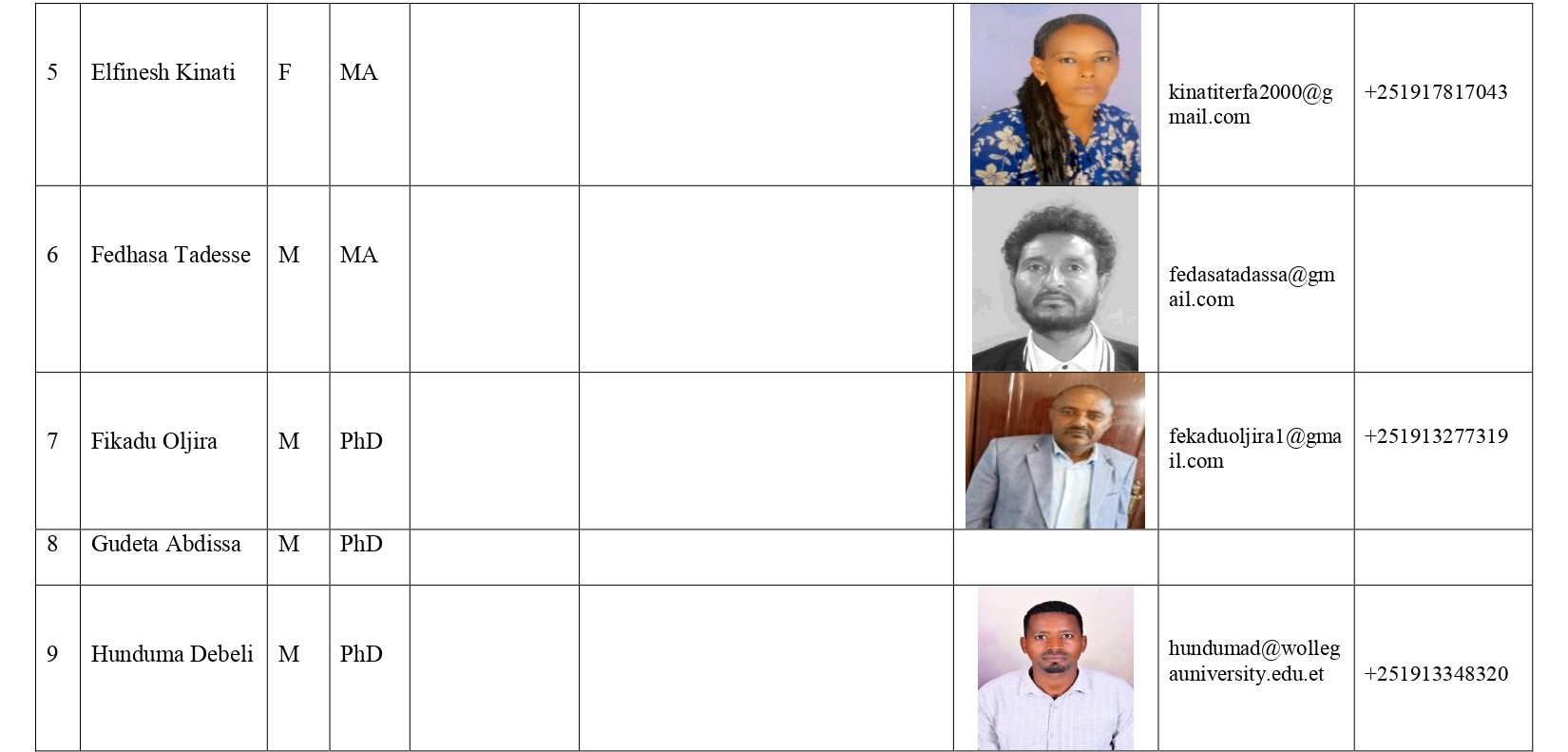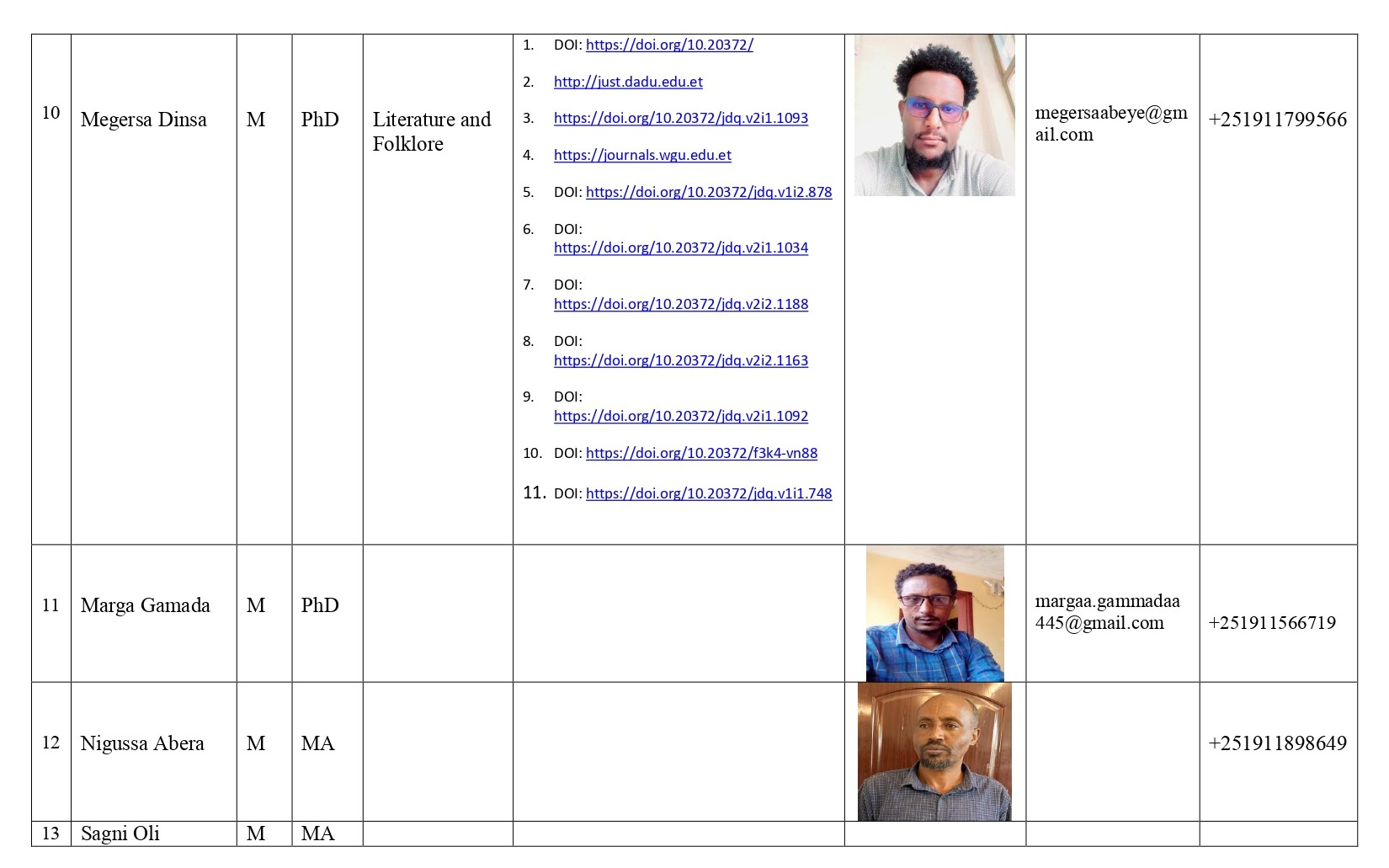
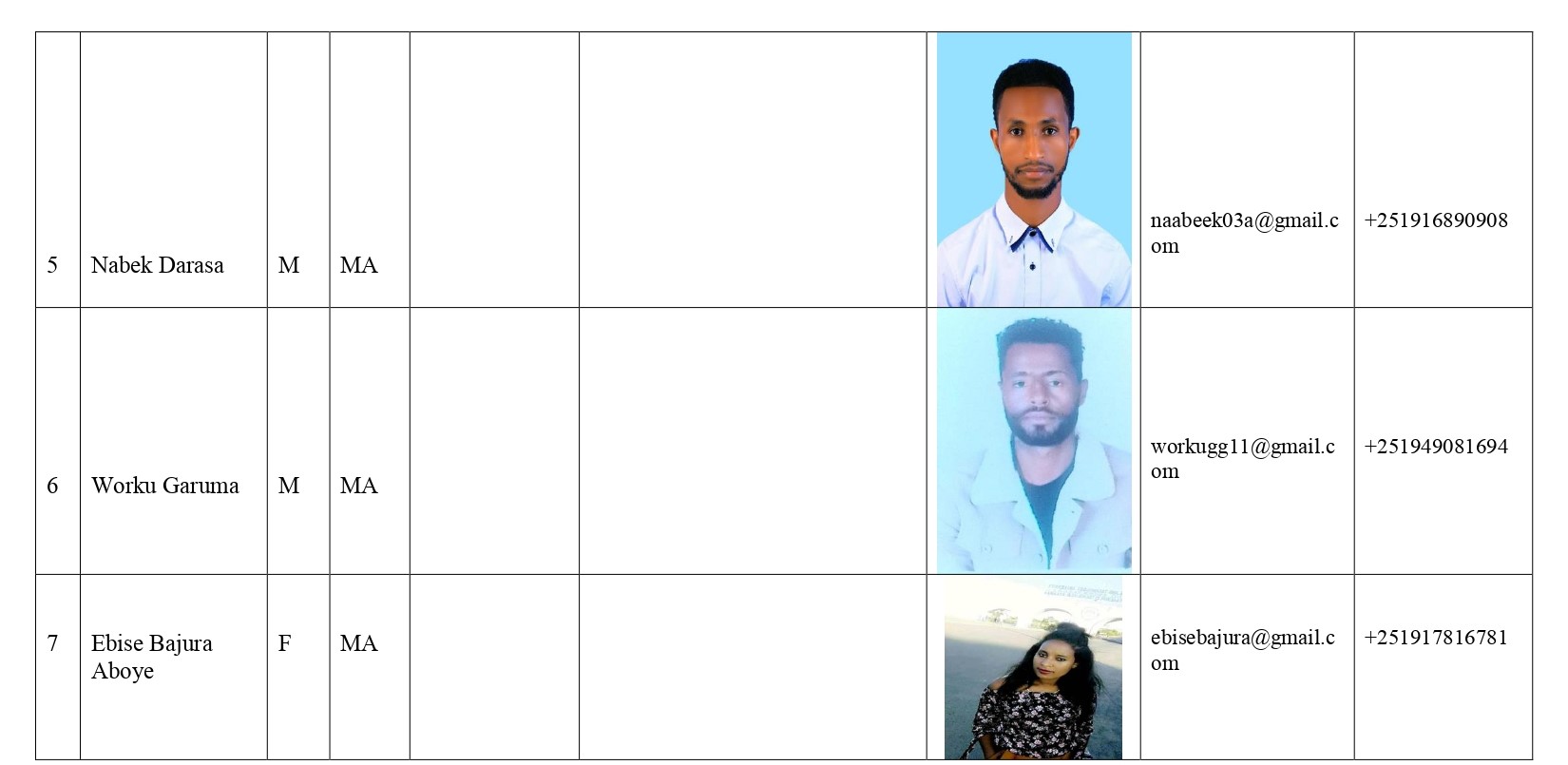
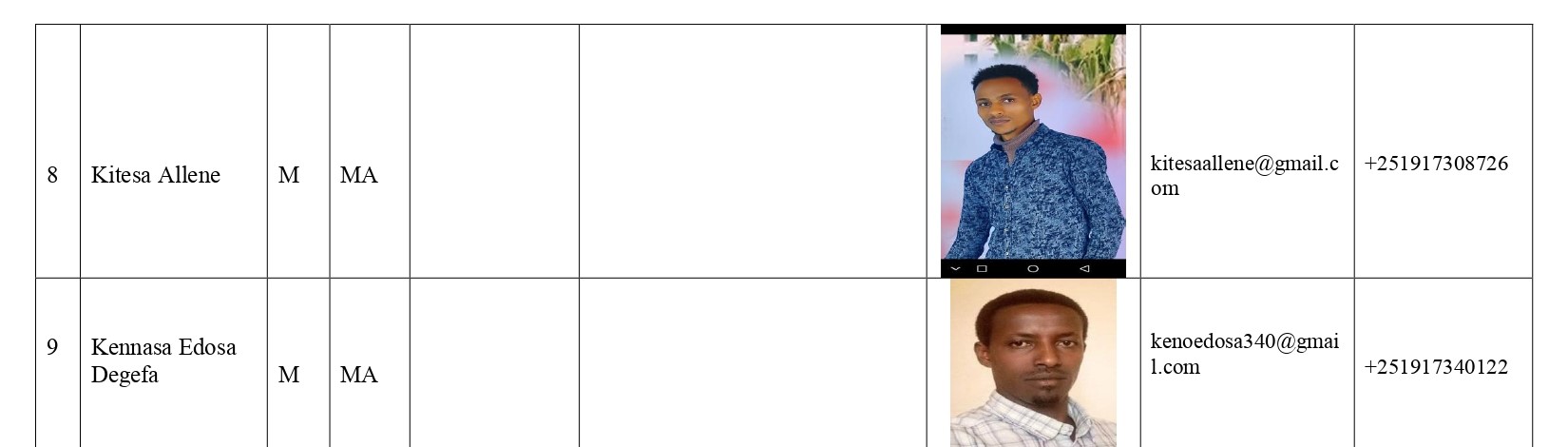
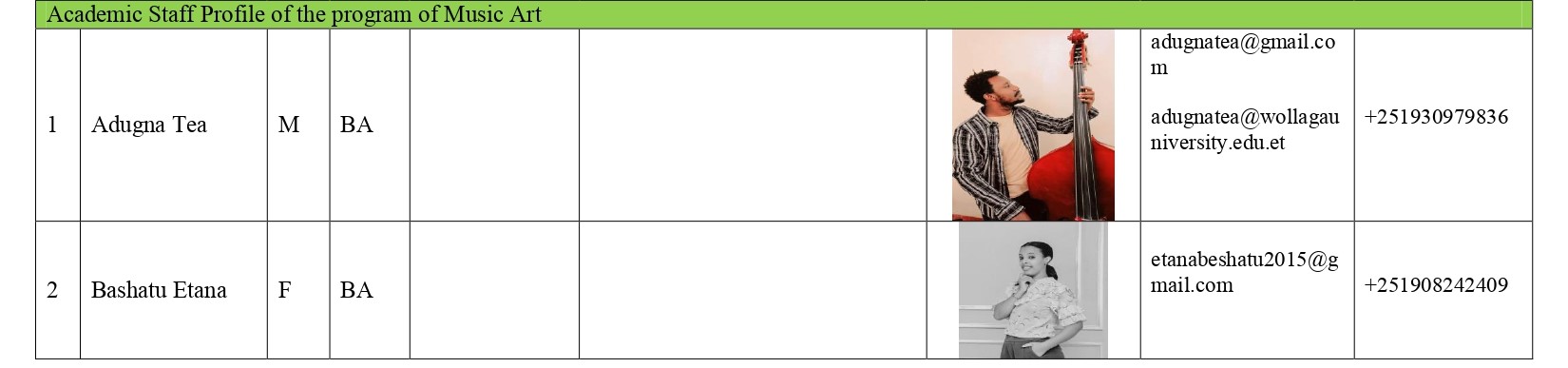
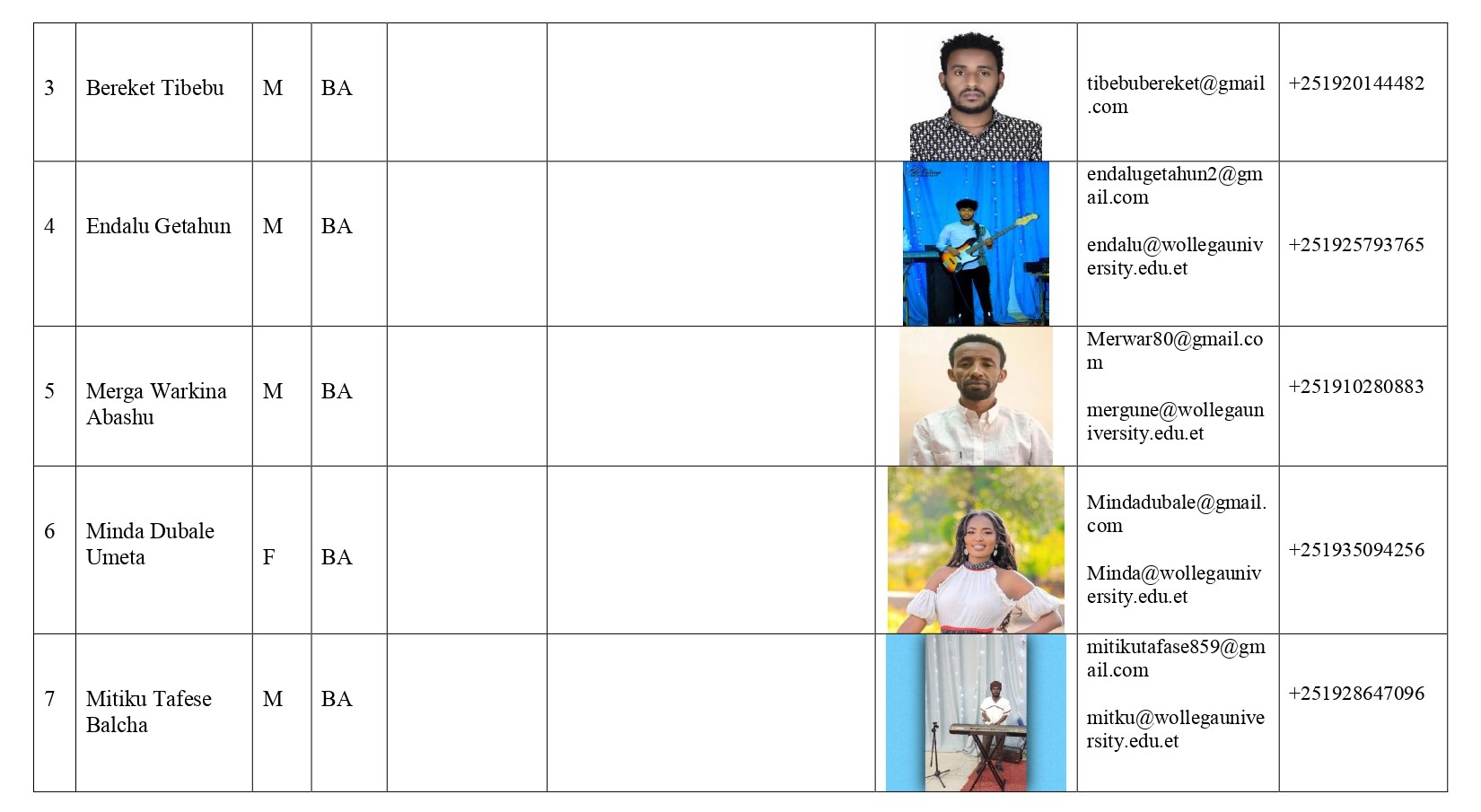


The Art and Oromo Folklore Department is one of the programs registered in Wollega University. It is established in 2006 E.C. (2013/14GC) under the department of Afaan Oromoo. It is established by the assumption to study and preserve the Oromo Culture, History and Identity through Performing and Visual Arts. At a time, the Art Fields was given as a truck, so that they can exercise and facilitate many preconditions to become an independent department. Since 2009 E.C (2017/18 GC) it is separated as one department including three Art Departments and one Folklore Department which is located in the Institute of Languages Study and Journalism of Wollega University. Now day, all these four programs are functioning under one department, but, utilizing different curriculums of their own. Although, they need different attentions and ways of doing things, they are working to their best of level.
This department is delivering courses for 97 regular students and 137 summer student in Regular and Summer modalities, and one Master’s program jointly working with the Department of Afaan Oromoo. The department has 29 academic staff, with the academic rank of lecturer and assistant Lecturer. Separately all have their own curriculums and way of conducting teaching learning process. The Visual Art Program has three specializations; Painting, Graphics Art and Design, and Sculpture which are still working as separate programs under the visual art program. While the Hachalu Hundessa School of Music is working as one program having over 10 major compulsory instruments. The Theatre program is one of the programs included in this department, which is producing a lot of prominent theatre professional in Ethiopia. And the Oromo Folklore is the fourth department (program) included in the Department of Art and Oromo Folklore, which is working on preserving Oromo Traditions, and folk tales in its portion.
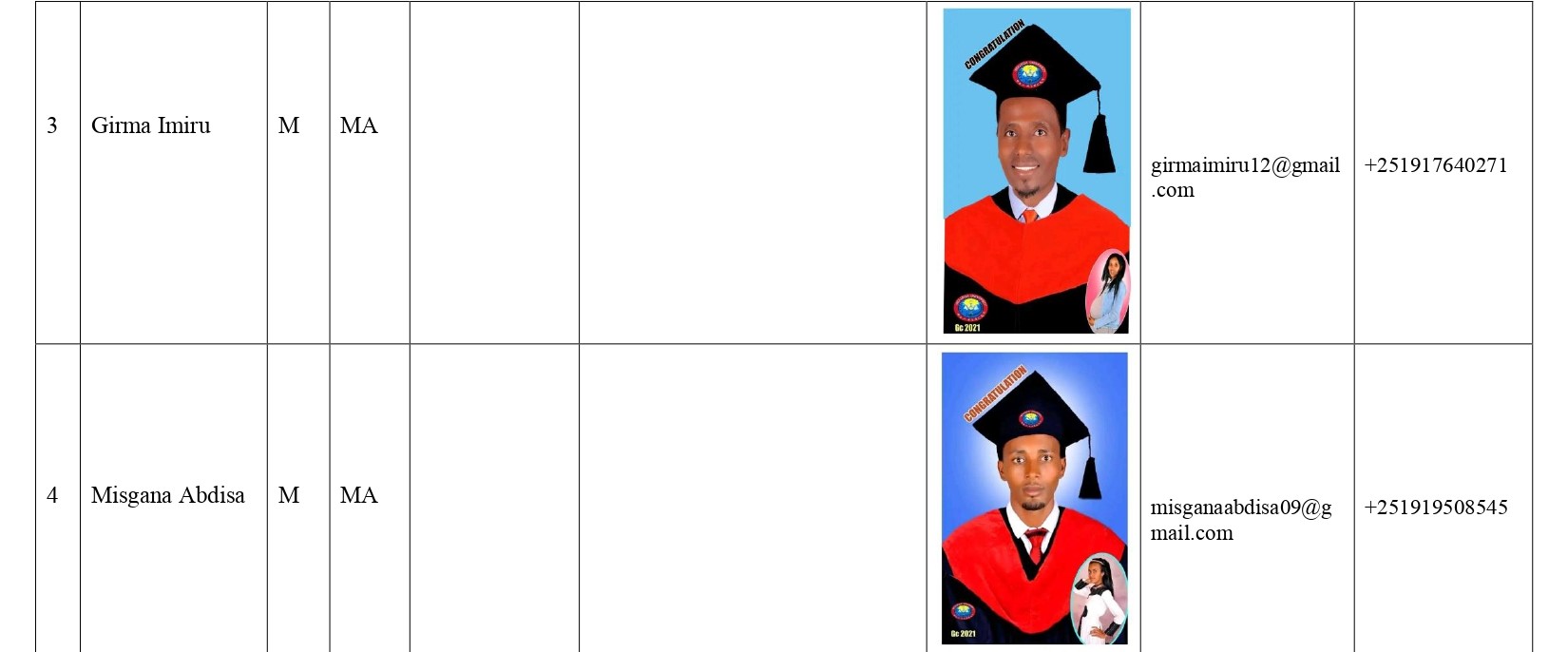
The Department of Journalism and Communication at Wollega University was established in 2008. It established by two (2) teachers and contained 27 students. In the process, today the department is moving by nine professional teachers (2 are PhD holder candidate and 7 masters’ level by accommodating 53 students at modality of regular. In those, one is from south Sudan. Accordingly, the department is encouraging national and international students by empowering in journalism skills and public relations practitioners. The department prioritizes the development of critical thinking and ethical standards, ensuring that students engage with media content responsibly and uphold professional integrity. By providing hands-on learning experiences through internships and collaborative projects with local media organizations, the department bridges theoretical knowledge with practical application.
Additionally, it encourages research and community initiatives that address contemporary issues in the field, promoting innovation and contributing to the broader body of knowledge. Community engagement is also a key focus, as the department organizes outreach programs and events that enhance media literacy and foster public dialogue on social issues. To be achieving this, the department has aimed to at producing journalists and communication experts who are intellectually rigorous and critical of mind, who respect fundamental human rights, who are tolerant and respect diversities in society, who are committed to social justice in theory and practice and who are dedicated to integrity and high ethical standards, empowering them with knowledge, skills and attitude of media and communication in a multi-layered and multicultural world. Then, professionally after completion of the program, the graduates are expected to be a reporter, editor, press advisor, program producer, media manager, Public relations officer and practitioners, media and communication researcher, communications officer, director of radio and television programs and consultant at national and international level.
Furthermore, the curriculum emphasizes technological proficiency, preparing students to navigate the rapidly evolving media landscape. Through interdisciplinary collaboration and a global perspective, the department aims to cultivate well-rounded graduates who are not only skilled professionals but also informed citizens dedicated to making meaningful contributions to society. The Department is strives to instill a commitment to lifelong learning, ensuring that its graduates remain adaptable and responsive to the dynamic challenges of the media industry. Ultimately, it has eager to do training, research, and workshop by collaborating with government and non-governmental institutions. Therefore, the department’s initiative is part of a broader strategic plan aimed at transforming the university into a center of applied science.
Main Campus (Nekemte)
Gimbi Campus(Faculty of Social Science and Humanity, Resource Mgmt. and Economics, Natural and Environmental Science , Business and Development )
Shambu Campus(Fuculty of Agriculture, Technology, Resource Mgmt. and Economics )