Department of Physics Programs

PhD Programs in Physics

  • PhD in Physics (Condensed Matter)

MSc Programs in Physics

  1. in Physics
  2. MSc in Condensed Matter Physics
  3. MSc in Quantum Field Theory
  4. in Quantum Optics
  5. in Statistical Physics
  6. in Laser Physics
  7. in Space Physics
  8. in Nuclear Physics
  9. in Astrophysics
  10. in Atmospheric Physics
  11. Programs in Physics
  12. Bachelor of Science (BSc.) in Physics
  13. Bachelor of Science (B.Sc.) in Physics Laboratory Technology

About the Department of Physics

Background      

Physics is a fundamental natural science that rigorously investigates the properties, behaviors, and interactions of matter and energy across space and time. It seeks to uncover the underlying principles governing the structure and dynamics of the universe through the formulation of precise mathematical models and experimental validation. Physics operates at the intersection of theory and observation, employing analytical and computational tools to construct predictive frameworks. These frameworks not only describe known phenomena but also predict new behaviors and guide experimental exploration.                                                                                                                                      

 The Physics Department established in 2007, offers comprehensive academic programs from Bachelor's to PhD levels, including specialized tracks. As of now, the department runs four active programs: PhD, MSc, BSc in Applied Physics, and BSc in Physics Laboratory Technology. The department is committed to a strategic roadmap focusing on high-quality education, cutting-edge research, industry partnership and staff development. By following this roadmap, the department aims to become a regional hub for physics education and innovation, equipping students with the skills and knowledge to tackle global scientific and technological challenges.

The Applied Physics program prepares individuals to bridge the gap between fundamental physics and real-world applications, focusing on industries like electronics, telecommunications, and renewable energy. It equips students to engage in research and development, solve complex engineering problems, and pursue advanced studies in physics and related fields. In contrast, the Physics Laboratory Technology program focuses on developing hands-on skills in operating and maintaining scientific instruments, ensuring accurate data collection, and supporting experimental research. Graduates are trained to work in academic, industrial, and research labs, with expertise in lab safety and technical operations. Together, these programs foster both theoretical knowledge and practical skills to drive innovation and support technological progress.

Vision, mission and core values of Physics Department

Vision

To become a leading center of excellence in physics education and research, driving scientific innovation and contributing meaningfully to the advancement of knowledge and the development of society in Ethiopia and beyond.

Mission

The Wollega University Physics Department is dedicated to delivering high-quality undergraduate and postgraduate programs that seamlessly integrate theoretical knowledge with practical skills. It actively engages in cutting-edge research aimed at addressing both national and global challenges. The department fosters strong collaborations with academic and research institutions to enrich learning experiences and drive innovation. Additionally, it is committed to promoting community engagement through science outreach and the practical application of physics to solve real-world problems.

Core Values

  1. Academic Excellence: Commitment to high-quality education, rigorous research, and continuous academic improvement.
  2. Scientific Integrity: Upholding honesty, transparency, and ethical conduct in research, teaching, and professional activities.
  3. Innovation and Creativity: Encouraging critical thinking, curiosity, and the development of novel solutions to scientific and societal challenges.
  4. Lifelong Learning: Fostering a culture of continuous knowledge growth and professional development for students and staff.
  5. Collaboration and Teamwork: Promoting interdisciplinary cooperation within the university and with national and international partners.
  6. Community Engagement: Applying physics knowledge to address local needs and contribute to regional and national development.
  7. Environmental and Social Responsibility: Advocating for sustainable practices and responsible use of scientific knowledge to improve society and protect the environment.
  8. Inclusiveness and Equity: Valuing diversity and ensuring equal opportunities for learning and participation in all departmental activities.

About the Department

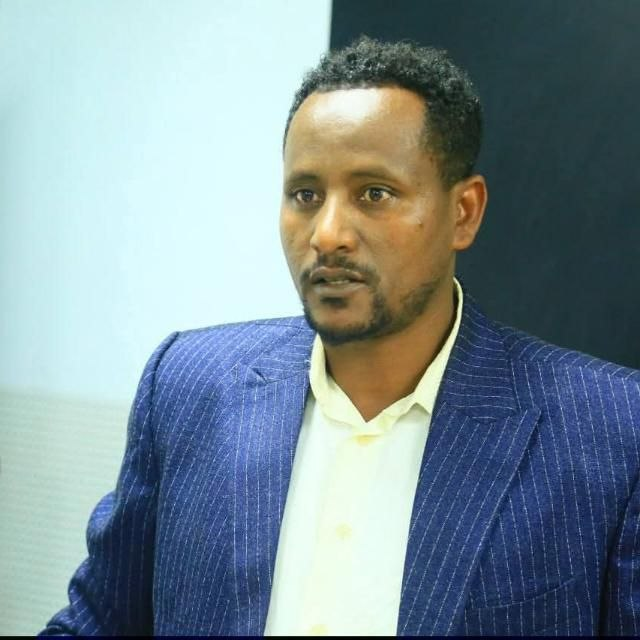
ha

Habtamu Siyum Terefa (MSc)

Head of Department of sport studies

The Department of Sport Studies, under the College of Natural and Computational Sciences at Wollega University, has been contributing to academic excellence, scientific advancement, and human resource development since its establishment in 2007. Through its commitment to quality education, research, and community engagement, the Department strives to produce competent, innovative, and ethically responsible graduates equipped with the knowledge and skills required to address contemporary scientific, technological, and societal challenges. Supported by qualified and experienced academic staff with diverse areas of specialization, the Department provides a dynamic academic environment that promotes critical thinking, analytical reasoning, problem-solving, and the application of sport and exercise science knowledge to real-world situations.

The Department offers undergraduate and postgraduate academic programs designed to meet national development priorities and respond to the growing demand for highly qualified professionals, researchers, and educators. At the undergraduate level, the Department offers a Bachelor of Science (BSc) in sport Science and, Bachelor of Science (BSc) in sport management which provides students with a solid foundation in fundamental and advanced exercise science concepts, theories, application and methods. The program emphasizes Performance improvement, health and fitness, training and conditioning, injuries prevention and rehabilitations, scientific assessments, psychological and high ethical preparations, while sport management more emphasis on planning and organizing, leaderships, finance, marketing and promotion, sport facility and event management, community development, governing and ethics, human resources management and the practical application of sport in science, technology, industry, education, and other fields. Through appropriate scientific assessment and application of sport and exercise science students develop the analytical and technical competencies necessary to address complex problems in sport science and various professional settings.

At the postgraduate level, the Department offers Master of Science (MSc) programs in three areas of specialization: Football coaching, sport management and teaching physical education. These programs are designed to deepen students’ theoretical understanding, strengthen their applied sport skills and promoting healthy life styles, and prepare them for advanced research, professional practice, and academic careers.

In addition to its teaching and learning activities, the Department places considerable emphasis on research, innovation, and community engagement. Academic staff and postgraduate students undertake research in diverse areas of sport and exercise science sciences, with a focus on generating knowledge and developing fundamental and analytical skills approaches to address practical problems at regional and national levels. The Department also seeks to strengthen collaboration with other academic institutions, research organizations, industries, and relevant stakeholders to promote interdisciplinary research and enhance the practical application of sport, health and exercise science knowledge.

Earth Science


Fekadu Tamiru GebissaName: Fekadu Tamiru Gebissa

Academic rank: Assistant Professor (PhD)

Specialization: Geophysics

Contact Address:

Mobile Phone: +251 938 457 583

Email: This email address is being protected from spambots. You need JavaScript enabled to view it.

Inst. Email: This email address is being protected from spambots. You need JavaScript enabled to view it.   

Research Area: Earth Resource Exploration, Earth Structure, and Dynamical Process.


Dereje Kenea MamoFull name: Dereje Kenea Mamo

Academic rank: Lecturer (MSc)

Specialization: Petrology

Contact Address:

Phone number: +251 917492246/920409455,

Email: This email address is being protected from spambots. You need JavaScript enabled to view it., 

Institutional email: This email address is being protected from spambots. You need JavaScript enabled to view it.

Research area:  Deformation and Mineralization, Metamorphism, Metallic and Gemstone minerals exploration and evaluation.


RESEARCH AND PROJECTS

The Department of Earth Sciences is actively engaged in research that addresses both local and global challenges. The following are the department's key research areas.

Geotectonic Setting of Western Ethiopia and Related Geodynamic Processes- The geology of the Western part of Ethiopia is barely understood in terms of its structural evolution and tectonic setting. Western Ethiopia is characterized by a complex geology shaped by diverse rock formations and a dynamic tectonic and structural setting, which needs to be reclassified according to the new tectonostratigraphic and litho-structural grouping systems.

Geological Exploration and Mineral Resource Assessment- Investigating Ethiopia’s rich mineral deposits and geological formations, particularly in Western Ethiopia, is another priority area. The primary objective is to delineate and evaluate all geological resources available in Western Ethiopia and to prepare a comprehensive geological resource database by improving the current resource occurrence information.

GIS and Remote Sensing- Using remote sensing and GIS technologies for mineral exploration, soil and water conservation, urban planning, agriculture, agricultural drought, forestry, land use planning, urban climate, climate change mitigation, biodiversity conservation, mining-related environmental problems, disaster risk reduction and management, health and epidemiology, renewable energy site selection, land administration and registration among many other fields of studies.

Mining and Mineral Processing- This research theme focuses on advancing mineral resource extraction techniques, extractive metallurgy, process mineralogy, and mechanization of artisanal and small-scale mining techniques.

Environmental Geosciences and Natural Hazards- Studying the impacts of environmental degradation related to mining activities and natural disasters such as landslides and seismicity of the region, with a view toward risk reduction and sustainable development.

ONGOING RESEARCH AND PROJECTS

  • The project titled ‘Geological Resources Exploration for Sustainable Mining in Wallaga Area, Western Ethiopia’ is under the approval process for funding.
  • Stakeholder Participation to Enhance Drought Resilience Through Reinforced Indigenous Knowledge and Smart Tools for the Socially Just Water Management (ABCDryBASIN) Project funded by IHE Delft under the Water and Development Partnership Program of the Netherlands.

COMMUNITY ENGAGEMENT

Public Lectures and Workshops

The department actively engages in educating local communities on topics such as environmental conservation, sustainable resource management, and disaster preparedness. Providing expertise to governmental and non-governmental organizations on issues related to geological hazards, environmental management, and resource development. The Department of Earth Sciences has established a series of consortia with national and international-level organizations to support workshops and community service projects.

Rural Water Resource Development Projects

Engaging with government and non-government organizations to fund and manage spring development projects for rural communities. Rural water resource development projects are transformative initiatives that significantly enhance public health by providing clean water, reducing waterborne diseases, and improving sanitation, while also contributing to sustainable economic development.

Campuses

Main Campus (Nekemte)

Gimbi Campus(Faculty of Social Science and Humanity, Resource Mgmt. and Economics, Natural and Environmental Science , Business and Development )

Shambu Campus(Fuculty of Agriculture, Technology, Resource Mgmt. and Economics )